
People with ‘problematic’ levels of Internet use report being more stressed out, having worse moods, and are less likely to do things like go ourside for recreation than those who regard things like social media as a pleasant diversion.They also reported stronger urges to return after a time away, classic addictive behavior..
The autthors described problematic Internet usage as functional impairment or distress if they were without things like online gaming, gambling, pornography use, social network use, shopping, etc. The question is whether or not people are doing those thing to escape stress or it's become part of their stress cycle. So they set out to see if daily stress, mood and temptation could be used to predict a person’s daily internet usage and how it might create a feedback loop that impacts daily pleasure, relief and neglect of other activities.
The data were 900 German adults who reported engaging in gaming, pornography use, social network use, or online shopping at least once in the last year. Depending on the degree to which they engaged in these behaviors, their Internet use was classified as pathological, risky, or non-problematic The authors did baseline interviews and then the participants completed an assessment every evening for 14 days. They reported their mood and stress levels, temptation to engage in PUI, and total Internet usage, as well as how much pleasure was derived from Internet usage and whether any other activities were neglected as a result. Like all surveys, there are too many confounders for the result to be anything except exploratory.
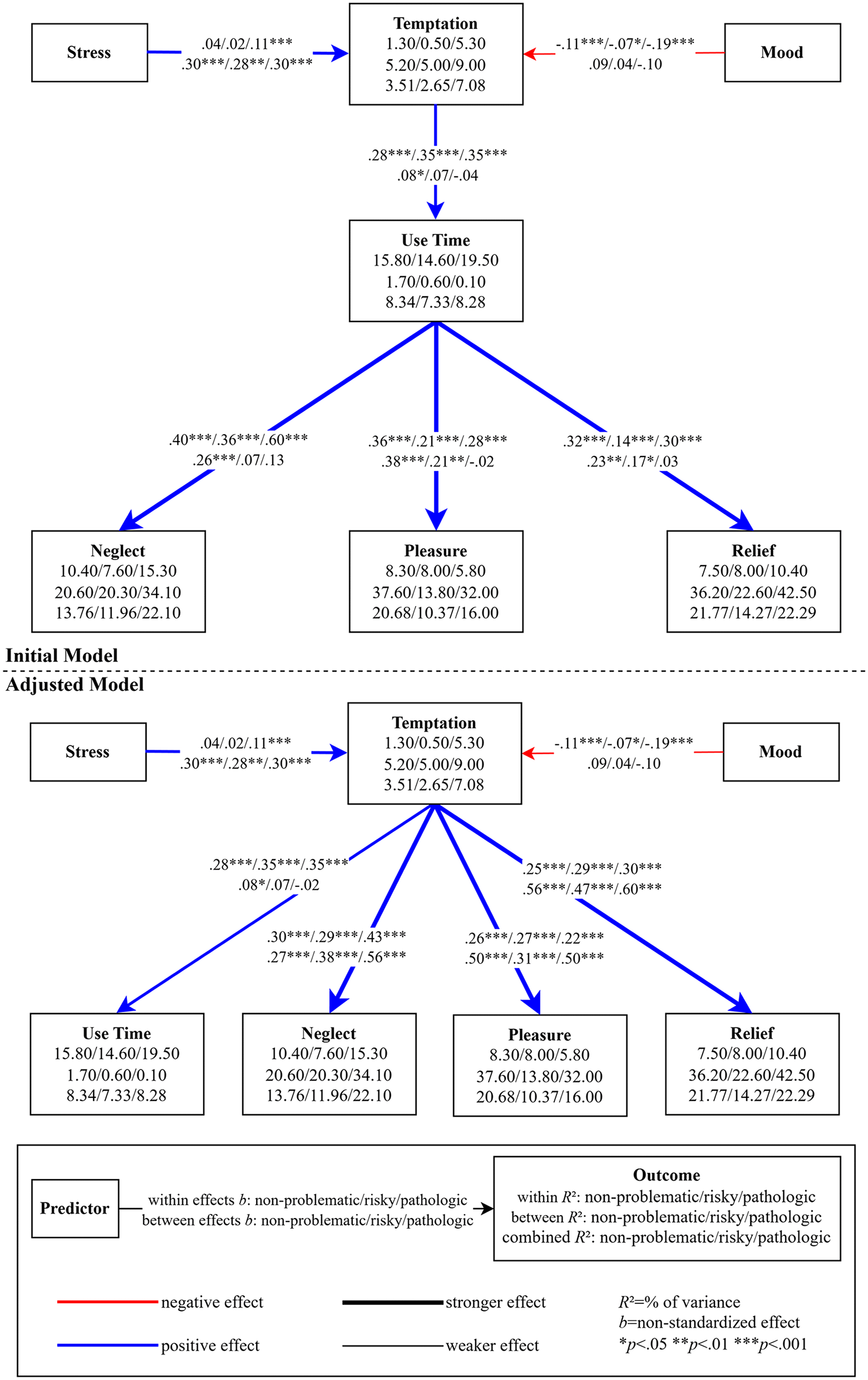
Initial model and use time adjustment: non-standardized effects of the multigroup multilevel structural equation model.
Results revealed that severe problematic internet use was associated with worsened moods and higher stress yet still resulted in longer Internet use times and greater neglect of other areas of life. Feelings of pleasure and relief became reinforcing factors.for continued elevated Internet use, with. The authors believe their results confirm common belief models about problematic Internet usage.
Citation: Citation: Andreas Oelker, Anna Knorr, Matthias Brand, and Silke M. Müller on behalf of the FOR2974 Consortium (2026) Temptation as a key driver between affective states and usage outcomes of problematic usage of the Internet: A 14-day ambulatory assessment study. PLoS One 21(7): e0352776. DOI: 10.1371/journal.pone.0352776