
Source:
Earth
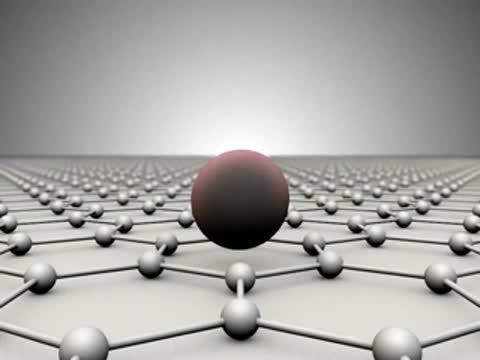
Understanding how atoms "glide" and "climb" on the surface of 2D crystals like tungsten disulphide may pave the way for researchers to develop materials with unusual or unique characteristics, according to an international team of researchers.
Confusion over a 1997 Food and Drug Administration (FDA) rule that eases the way for food manufacturers to use ingredients "generally regarded as safe," or GRAS, has inspired a new initiative by food makers. Food safety advocates say the current GRAS process allows substances into the food supply that might pose a health risk, while industry defends its record. An article in Chemical & Engineering News (C&EN) details what changes are on the table.
Hilo, Hawai`i–The Earth's soils store four times more carbon than the atmosphere and small changes in soil carbon storage can have a big effect on atmospheric greenhouse gas concentrations. A new paper in the journal Nature Climate Change concludes that climate warming does not accelerate soil organic carbon decomposition or affect soil carbon storage, despite increases in ecosystem productivity.
WASHINGTON, DC—In the early morning hours of March 4, 2002, military officers in Bagram, Afghanistan desperately radioed a Chinook helicopter headed for the snowcapped peak of Takur Ghar. On board were 21 men, deployed to rescue a team of Navy SEALS pinned down on the ridge dividing the Upper and Lower Shahikot valley. The message was urgent: Do not land on the peak. The mountaintop was under enemy control.
The rescue team never got the message. Just after daybreak, the Chinook crash-landed on the peak under heavy enemy fire and three men were killed in the ensuing firefight.
Nanocomposite oxide ceramics have potential uses as ferroelectrics, fast ion conductors, and nuclear fuels and for storing nuclear waste, generating a great deal of scientific interest on the structure, properties, and applications of these blended materials.
This represents a tremendous breakthrough for next-generation electronics and optoelectronics devices -- enabling the use of large-scale and low-cost manufacturing processes.
"By taking advantage of larger-sized graphene films, hybrid heterostructures can be used to fabricate various electronics and optoelectronics devices such as flexible and wearable LED displays for commercial use," said Yi.
This is an animation of the micro-rod growth process.
Alexandria, Va. — "Virtual water" was coined in 1993 to help explain why long-predicted water wars driven by water and food security had not occurred among the arid nations of the Middle East and North Africa. The virtual water notion refers basically to the total amount of freshwater, either from rainfall or irrigation, used in the production of food commodities, including crops and fodder-fed livestock, or other goods and services — agricultural, industrial or otherwise. Taking root in the late 1990s across a range of disciplines, the concept has since expanded and evolved.
MADISON, Wis. — The number of extremely hot days in Eastern and Midwestern U.S. cities is projected to triple by mid-century, according to a new study led by University of Wisconsin-Madison researchers and published today in the Journal of the American Medical Association.
ALBUQUERQUE, N.M. — Researchers at Sandia National Laboratories' Z machine have produced a significant output of fusion neutrons, using a method fully functioning for only little more than a year.
The experimental work is described in a paper to be published in the Sept. 24 Physical Review Letters online. A theoretical PRL paper to be published on the same date helps explain why the experimental method worked. The combined work demonstrates the viability of the novel approach.
The Tibetan Plateau in south-central Asia, because of its size, elevation and impact on climate, is one of the world's greatest geological oddities.
At about 960,000 square miles it covers slightly more land area than Alaska, Texas and California combined, and its elevation is on the same scale as Mount Rainier in the Cascade Range of Washington state. Because it rises so high into the atmosphere, it helps bring monsoons over India and other nations to the south while the plateau itself remains generally arid.
University of Minnesota electrical engineering researchers have developed a unique nanoscale device that for the first time demonstrates mechanical transportation of light. The discovery could have major implications for creating faster and more efficient optical devices for computation and communication.
The research paper by University of Minnesota electrical and computer engineering assistant professor Mo Li and his graduate student Huan Li has been published online and will appear in the October issue of Nature Nanotechnology.
Researchers have discovered a way to create a highly sensitive chemical sensor based on the crystalline flaws in graphene sheets. The imperfections have unique electronic properties that the researchers were able to exploit to increase sensitivity to absorbed gas molecules by 300 times.
The study is available online in advance of print in Nature Communications.
Scientists at The University of Manchester have generated a new star-shaped molecule made up of interlocking rings, which is the most complex of its kind ever created.
Known as a 'Star of David' molecule, scientists have been trying to create one for over a quarter of a century and the team's findings are published in the journal Nature Chemistry.
WASHINGTON, Sept. 22, 2014 — It's the first day of autumn, and the telltale signs are here: crisp weather, pumpkin spice lattes and, most importantly, the leaves are changing colors. Ever wonder why some leaves turn red, others yellow and some just turn brown? We'll tell you all about the chemistry behind this seasonal spectacle in the latest Reactions episode. Learn all about it at https://www.youtube.com/watch?v=X0nWmTeQPfo.