Earth

The holidays can be a time for binge watching TV shows or movies and that's fine, and all of those hours in front of the television may lead to increased snacking, which can also be fine. It's when that happens year 'round that problems occur.

A recent University of Houston study conducted by professor Temple Northup suggests people who watch excessive amounts of TV tend to eat more unhealthy foods and might not understand the foundations of a healthy diet.
The best material to keep carbon dioxide from natural gas wells from fouling the atmosphere may be a derivative of asphalt, according to a new paper.

The lowering of the ocean's pH is making it harder for corals to grow their skeletons and also easier for bio-eroding organisms to tear them down. Erosion rates increase tenfold in areas where corals are also exposed to high levels of nutrients, according to a study published in Geology. As sea level rises, these reefs may have a harder time growing toward the ocean surface, where they get sunlight they need to survive.

Every several years, workers apply a clay mask to India's iconic but yellowing Taj Mahal to remove layers of grime and reveal the white marble underneath. Now scientists are getting to the bottom of what kinds of pollutants are discoloring one of the world's celebrated wonders. Their findings, published in Environmental Science & Technology, could help inform efforts to protect the mausoleum and other surfaces from pollution.

Disney researchers have developed a video technique for automatically detecting unusual behaviors of giraffes at night, providing naturalists with an improved tool for monitoring the health and safety of the animals in the wild and under human care.

Automated cameras make it possible to broadcast even minor events, but the result often looks...well, robotic. Now scientists at Disney Research have made it possible for robotic cameras to learn from human operators how to better frame shots of a basketball game.

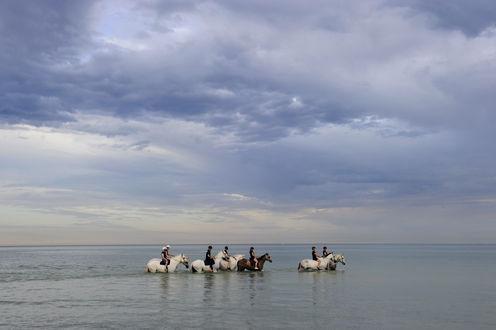
Horses cool off during an Adelaide heatwave in January 2014. AAP Image/David Mariuz

By James Whitmore, The Conversation

2014 has been confirmed as Australia’s third-hottest year, capping off a record-breaking decade, according to the Bureau of Meteorology’s annual climate statement, released today.

Lake Erie has experienced harmful algal blooms and severe oxygen-depleted "dead zones" for years and the widespread drought in 2012 added to that, bringing with it the largest dead zone since the mid-1980s.

Rock soil droplets formed by heating are part of the evidence used to content that a disastrous cosmic impact 12,900 years ago triggered the Younger Dryas cold period.

Most likely those droplets came from Stone Age house fires, according to new research of soil from Syria.

A new study suggests pharmaceuticals and chemicals from personal care products end up in swimming pools, possibly interacting with chlorine to produce disinfection byproducts with unknown properties and health effects. And that's without all of the urine.

Cirrhosis of the liver is more common than previously thought, affecting more than 633,000 adults yearly, according to a new study.

Surprisingly, 69 percent of the adults identified as possibly having cirrhosis may not know they have the disease.

A new study links the March 2014 earthquakes in Poland Township, Ohio to hydraulic fracturing that activated a previously unknown fault. The induced seismic sequence included a rare felt earthquake of magnitude 3.0, according to the paper. Hydraulic fracturing, or fracking, is a method for extracting gas and oil from shale rock by injecting a high-pressure water mixture directed at the rock to release the oil and gas trapped inside. The process of fracturing the rocks normally results in micro-earthquakes much smaller than humans can feel.

The song of the swamp sparrow, a grey-breasted bird found in wetlands throughout much of North America, is a simple melodious trill, repeated over and over again.

"It's kind of like a harmonious police whistle," said biologist Stephen Nowicki.

But according to a new study by Nowicki and Robert Lachlan, swamp sparrows are capable of processing the notes that make up their simple songs in more sophisticated ways than previously realized -- an ability that may help researchers better understand the perceptual building blocks that enable language in humans.

Controlled-release fertilizers (CRFs) are a widely used method of delivering nutrients to nursery container crops. The fertilizers contain encapsulated solid mineral nutrients that dissolve slowly in water, and are then released into substrates over an extended period of time. Although the use of CRFs is an accepted practice, growers and researchers are always looking for ways to decrease fertilizer and irrigation expenses and reduce the impact of nutrient leaching into the environment.

As competition for fresh water increases and fertilizer prices rise, the horticulture industry is looking to reclaimed wastewater as a valuable resource for supplying irrigation and necessary nutrients for urban landscapes.