Earth

An international group of scientists has proposed a start date for the dawn of the Anthropocene - a new chapter in the Earth's geological history.

Humans are having such a marked impact on the Earth that they are changing its geology, creating new and distinctive strata that will persist far into the future. This is the idea behind the Anthropocene, a new epoch in Earth history proposed by the Nobel Prize-winning atmospheric chemist Paul Crutzen just 15 years ago. Since then the idea has spread widely through both the sciences and humanities.
The acceleration in global sea level from the 20th century to the last two decades has been significantly larger than scientists previously thought, according to a new Harvard study.

The days of assuming natural resources can be swapped in and out to solve shortages - corn for oil, soy for beef - may be over. An international group of scientists demonstrate that many key resources have peaked in productivity, pointing to the sobering conclusion that "renewable" is not synonymous with "unlimited."

Every summer, the news reports on a bacterium called Vibrio vulnificus found in warm saltwater that causes people to get sick, or die, after they eat raw tainted shellfish or when an open wound comes in contact with seawater.

People with a weakened immune system, chronic liver disease or iron overload disease are most at risk for severe illness. Vibrio vulnificus infections in high-risk individuals are fatal 50 percent of the time.

A new study has found that the potassium salts (bicarbonate and citrate) plentiful in fruit and vegetables, play an important part in improving bone health. For the first time, the results also showed that these potassium salts reduce bone resorption, the process by which bone is broken down, therefore increasing their strength.

The study, published in the journal Osteoporosis International, also revealed that high intake of potassium salts significantly reduces the excretion of calcium and acid in urine.

DNA molecules provide the "source code" for life in humans, plants, animals and some microbes. But now researchers report an initial study showing that the strands can also act as a glue to hold together 3-D-printed materials that could someday be used to grow tissues and organs in the lab. This first-of-its-kind demonstration of the inexpensive process is described in the brand-new journal ACS Biomaterials Science & Engineering.

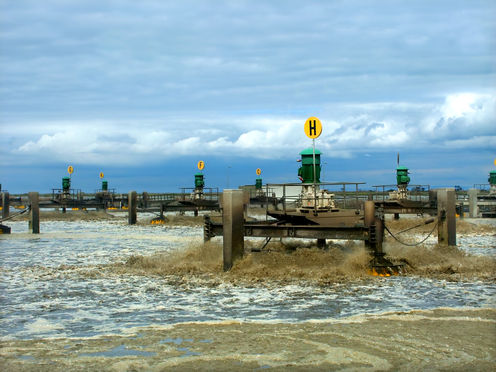
The Western Treatment Plant in Werribee, Victoria, largely powers itself using biogas – a by-product of sewage treatment. Jason Patrick Ross/Shutterstock

A global "gold rush" has led to a significant increase of deforestation in the tropical forests of South America.

This is according to new research publish today which has highlighted the growing environmental impact of gold mining in some of the most biologically diverse regions in the tropics.

Researchers from the University of Puerto Rico have shown that between 2001 and 2013, around 1680 km2 of tropical forest was lost in South America as a result of gold mining, which increased from around 377 km2 to 1303km2 since the global economic crisis in 2007.

Bacteria are as individual as people, according to new research by Professor Peter Young and his team in the Department of Biology at the University of York. Bacteria are essential to health, agriculture and the environment, and new research tools are starting to shed more light on them.

Water is different in the 21st Century and we need changes in water drinking standards, according to a new review. Water is safer than ever, but they believe the public will be concerned about water quality due to media attention focusing on California's drought conditions, the technology of fracking, and the nationwide aging infrastructure of rusty, degrading pipes.

Making cement is a centuries-old art that has yet to be perfected, according to researchers at Rice University who believe it can be still more efficient.Former Rice graduate student Lu Chen and materials scientist Rouzbeh Shahsavari calculated that fine-tuning the process by which round lumps of calcium silicate called clinkers are turned into cement can save a lot of energy.

NASA's Terra satellite passed Tropical Cyclone Bansi on January 13 when it was about 170 nautical miles (195 miles/314 km) north of the Island of Mauritius and a major hurricane in the Southern Indian Ocean.

Dinosaurs flourished in Europe right up until the asteroid impact that wiped them out 66 million years ago, a new study shows.

The theory that an asteroid rapidly killed off the dinosaurs is widely recognized, but until recently dinosaur fossils from the latest Cretaceous--the final stanza of dinosaur evolution--were known almost exclusively from North America. This has raised questions about whether the sudden decline of dinosaurs in the American and Canadian west was merely a local story.

Participants in a sleep study who had asthma had an increased risk for developing obstructive sleep apnea, with this association stronger with having had asthma longer, according to a new study.

In adults, obstructive sleep apnea (OSA) is highly and increasingly prevalent, and is associated with adversely affecting health and a higher risk of death. Although a few studies have suggested an asthma-OSA association, it has been unknown whether asthma is a causal risk factor for OSA, according to background information in the article.

Over the few last years, various genetically modified crops with health benefits have been developed in which genes, mostly originating from other organisms, have been added. Notable examples include rice enriched with pro-vitamin A (also known as 'Golden Rice') and folate-enriched rice, developed at Ghent University.